Satlyt Raised $8M to Turn Idle Satellites Into AI Data Centers
Satlyt raised $8M to run AI software on satellites and turn idle orbital hardware into virtual space data centers. Here's the pitch, and the hard parts.

Satellites waste most of their computing power
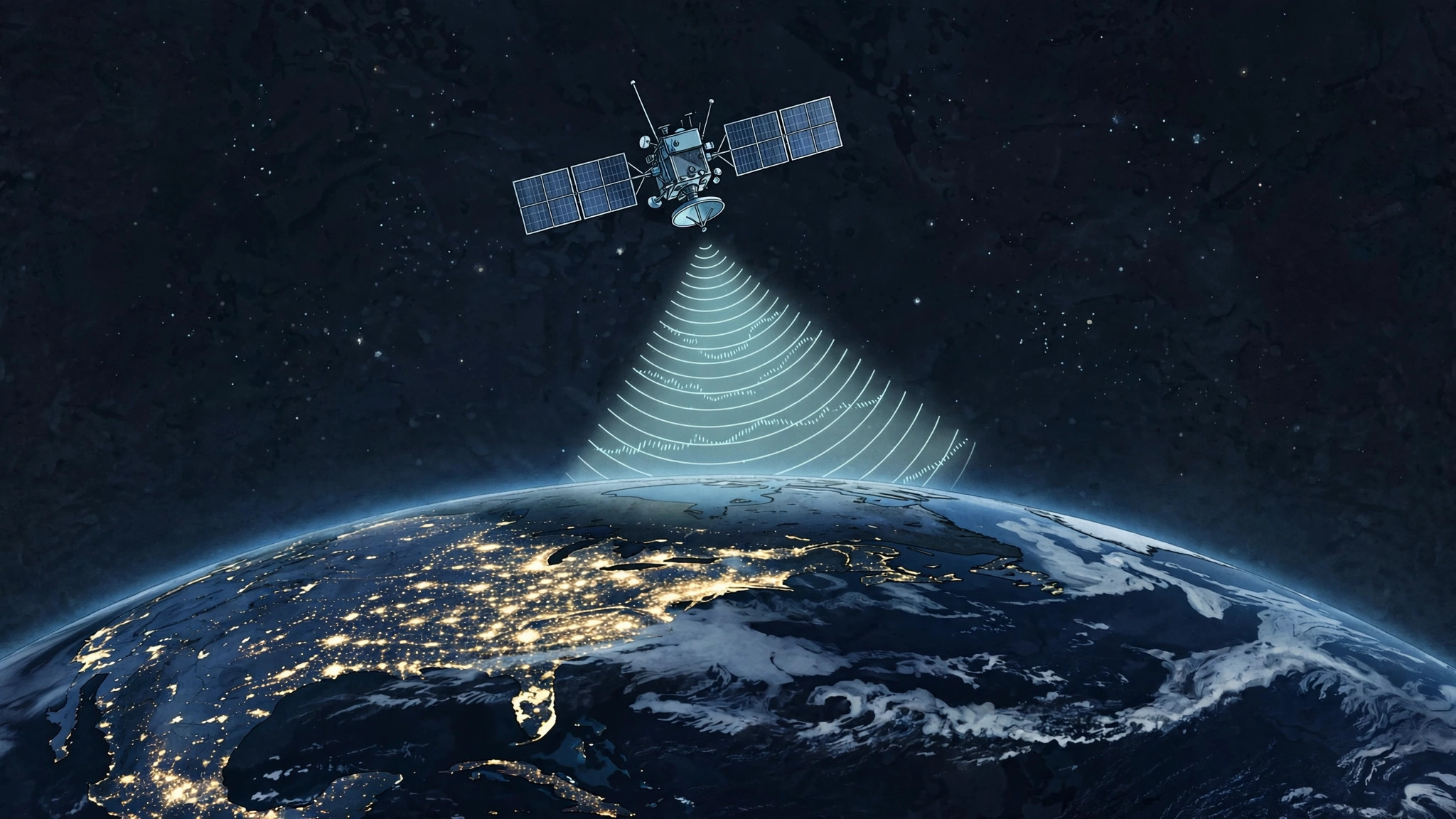
A satellite in orbit is a computer with solar panels, and most of the time its processors sit idle. The bottleneck is not compute; it is the downlink. Getting data from orbit to the ground is slow, expensive, and limited to brief windows when a ground station is in range. So satellites collect far more data than they can send down, and much of it never gets used.
Satlyt, a startup that announced an $8 million seed round on October 13, wants to flip that equation. Instead of sending raw data to Earth for processing, run the software in orbit and send down only the results. The round was led by Houston-based Non Sibi Ventures, and the company also landed a spot in TechCrunch Disrupt's Startup Battlefield Top 20.
The idea is not new, but the timing is. Satellite constellations are growing fast, onboard processors are getting stronger, and AI models are getting small enough to run at the edge. The question is whether a software layer can make orbital computing practical for operators who are not aerospace giants.
What Satlyt actually sells
Satlyt describes its product as an open, cross-platform software layer that turns scattered orbital computing hardware into coordinated, virtual space data centers. In plain terms: it lets satellite operators run AI and edge computing workloads on hardware already in orbit, across different satellite platforms, without rewriting their software for each one.
The pitch has three parts. First, process data where it is collected, so only useful results need the downlink. Second, pool idle compute across satellites so workloads can move to whichever hardware has capacity. Third, do it with a single line of code, according to the company's Battlefield pitch, which is the kind of claim that deserves a demo before anyone believes it.
If it works, the use cases are obvious: Earth observation satellites that flag wildfires, floods, or illegal fishing in near real time instead of hours later; defense and disaster-response imaging where minutes matter; and scientific missions that filter noise before it ever reaches the ground.
Why investors are paying attention now
Space infrastructure is having a funding moment. Kapta Space raised $24M for cheap radar satellites, and the broader startup funding week showed billions flowing into AI infrastructure. Satlyt sits at the intersection: it is an AI infrastructure company whose data centers happen to be in orbit.
The economics help explain the interest. Launch costs have fallen, constellations are multiplying, and every new satellite adds compute capacity that mostly goes unused. A software company that can monetize that idle capacity without building hardware has the kind of margins investors like, assuming the technical problems are solvable.
There is also a strategic angle. Governments want resilient, distributed computing that does not depend on a handful of ground stations. Onboard processing makes satellites less dependent on downlinks that can be jammed, congested, or simply out of range.
The hard parts
Radiation is the first problem. Chips in orbit get hit by cosmic rays that cause errors and degradation, which is why space-grade hardware lags years behind consumer chips. Software has to handle faults gracefully, and that is harder than it sounds when your server is 500 kilometers up and cannot be rebooted by hand.
Power is the second. A satellite's solar panels and batteries are sized for its mission, not for running someone else's AI workloads. Every watt spent on third-party compute is a watt not spent on the satellite's own job.
Then there is the business problem: satellite operators are conservative for good reason. Their hardware costs millions, cannot be repaired, and has to last a decade. Convincing them to run outside software on it requires proof, insurance, and a track record Satlyt does not yet have.
Still, the seed round buys time to build that proof. The satellite AI data centers idea will be judged on demonstrations, not decks. Watch for a pilot with a real constellation operator; that is the milestone that turns this from an interesting pitch into a real business.