Kapta Space Raised $24M to Build Cheap Radar Satellites for Defense
Seattle's Kapta Space raised a $24M Series A led by Washington Harbour Partners to scale its low-cost steerable radar satellites. The tech, the Gates-linked backers, and why defense wants cheap radar.
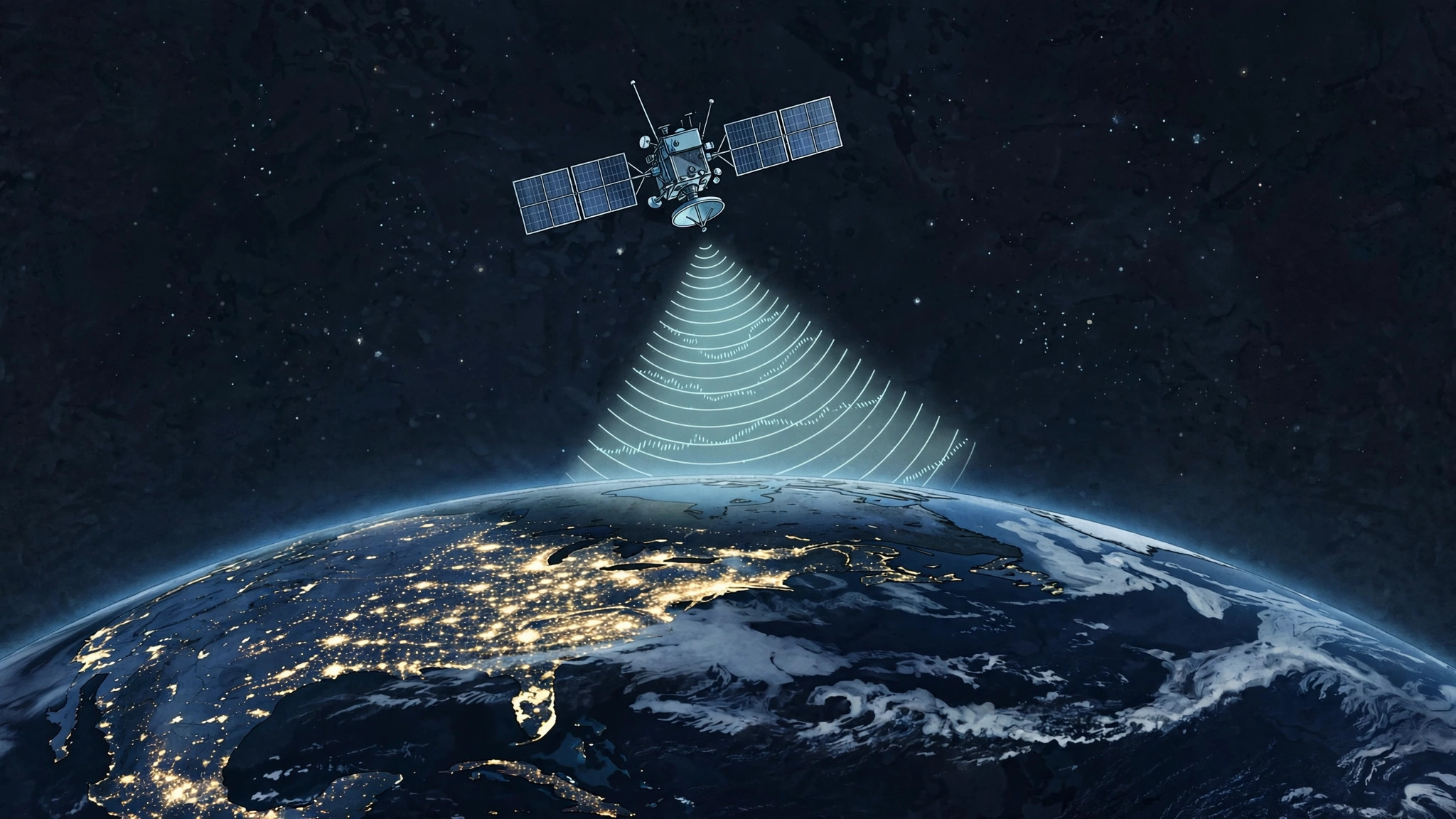
While the funding world obsesses over AI startups — and last week was a roughly $4 billion week for AI deals alone — a Seattle company building something decidedly physical just closed a serious round. Kapta Space announced a $24 million Series A on October 9 to scale up its low-cost steerable satellite radar, bringing total funding to $30 million.
What Kapta Space Is Actually Building
Kapta's technology is called MESA — Metamaterial Electronically Scanned Array. In plain terms: radar satellites that produce high-resolution geospatial imagery and track moving targets without the cost, power draw, and manufacturing complexity of traditional radar.
Why does that matter? Radar sees through clouds and works at night, unlike optical satellites. But radar satellites have historically been expensive, power-hungry beasts. If Kapta can deliver radar imaging at a fraction of the cost, it unlocks persistent surveillance-grade coverage at constellation scale — dozens or hundreds of satellites instead of a handful of exquisite ones.
The target customer is clear: defense and intelligence agencies that want affordable, always-on eyes in orbit. This is dual-use technology in the most literal sense, and the company isn't coy about it.
The $24M Round and the Gates Connection
The round was led by Washington Harbour Partners, a defense-tech specialist, and co-led by Bison Ventures. The eye-catching name on the cap table is MetaVC — a metamaterials-focused fund backed by Bill Gates and former Microsoft CTO Nathan Myhrvold — which re-invested after leading Kapta's $5 million seed. New money also came from MYDA Capital, Entrada Ventures, Aurelia Foundry, and Fitz Gate Ventures.
A Gates-linked fund backing radar satellites is the kind of detail that writes its own headlines, but the substance is more interesting: MetaVC invests specifically in metamaterials breakthroughs, and MESA is exactly that — a materials-science bet on steering radio waves without moving parts. Add a prior $1.8 million U.S. Department of Defense grant, and you have a company the Pentagon was already watching.
The capital funds manufacturing scale-up, spaceflight qualification, and initial orbital demonstration missions. Translation: Kapta has proven the physics; now it needs to prove it can build the things reliably and get them into orbit.
The Founders Know Radar
CEO Milton Perque and co-founder Adam Bily aren't first-timers. Both were engineering leaders at Echodyne, the radar company that made its name on compact electronically scanned arrays for drones and border security. Bily adds stints at Apple and Astranis, the satellite communications startup. This is a team that has shipped hard hardware before — which matters enormously when the product has to survive launch vibrations and then work perfectly, forever, in vacuum.
Why Defense Wants Cheap Radar
Step back and the market logic is straightforward. Modern conflict runs on information: who sees the battlefield first, in all weather, at all hours. Optical satellites go blind under cloud cover; radar doesn't. A constellation of cheap radar satellites gives you revisit rates — how often you image the same spot — that a few expensive satellites can't match.
The broader trend is impossible to miss: defense tech is having its venture moment, and space is its most capital-intensive frontier. Investors who spent a decade funding software are rediscovering that atoms matter. Kapta's bet is that radar, like launch before it, is ripe for the cost curve to collapse. If they're right, $24 million will look like a bargain. If they're wrong, it'll be an expensive lesson in how hard space hardware really is — but with this team's track record, smart money is on the former.