ICON Banks $200M to Put Robotic Home Printers in Builders' Hands
Austin's 3D-printing construction company just raised $200M from BlackRock and Baillie Gifford. The money goes toward a $899,000 robotic printer called Titan — and the end of the housing crisis, if you believe the pitch.
The most interesting funding round of the week has nothing to do with AI agents or chatbots. Austin-based ICON just announced a $200 million Series D, co-led by Baillie Gifford and funds managed by BlackRock, to do something the tech industry usually ignores: change how buildings get built.
It's a notable raise in a funding week where roughly $4 billion went to AI startups alone. When money is flowing that freely toward software, the fact that institutional giants like BlackRock and Baillie Gifford are backing a company that makes physical things — very big, very heavy physical things — says something about where the construction-tech thesis is headed.
What the ICON Series D actually buys
The investor list reads like a serious-money roster: Capital Factory, CAZ Investments, Moderne Ventures, Moonshots Capital, Norwest, Overmatch, The Syndicate, and Tiger Global alongside the co-leads. That's the kind of cap table that doesn't show up for a demo day — it shows up when the technology has crossed from promising to provable.
The money goes to three things: manufacturing and deployment of robotic construction systems, a new large-scale R&D facility in Austin, and expansion of Titan and Olympus technology across Texas, Florida, Washington D.C., and new U.S. markets. ICON says it's on pace for 4x revenue growth in 2026 and has already surpassed 270 3D-printed buildings.
Titan: the $899,000 robot at the center of it
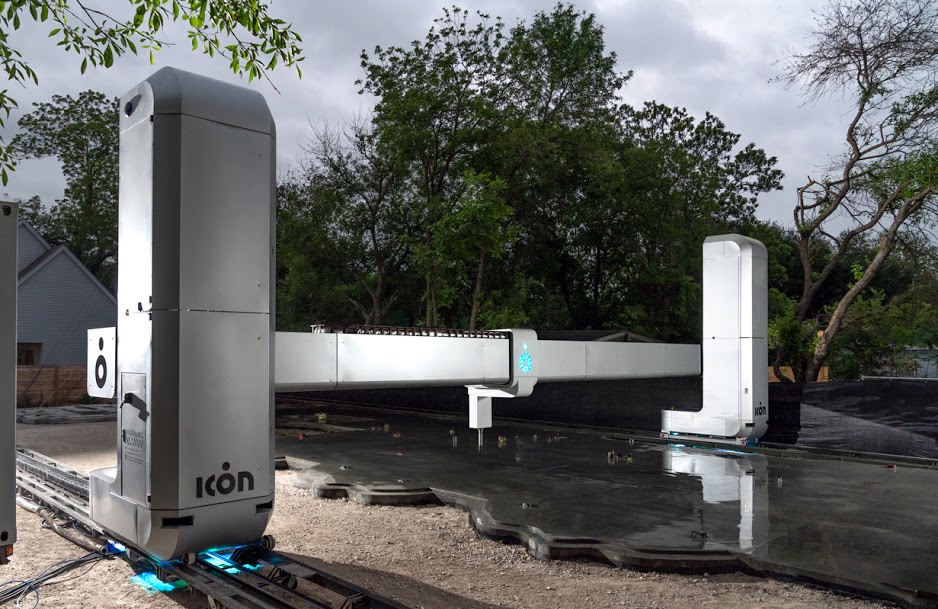
The star of this round is Titan, ICON's multi-story robotic print system, entering its first commercial rollout. List price: $899,000. Build height: 27 feet. Production is starting at ICON's Austin factory.
The pitch is straightforward: sell the printers to builders, not just print the buildings yourself. That's a platform move, not a services move — and it's the difference between a cool demo and a company. ICON's three business units map it out: Build (residential, commercial, and hospitality structures), Tech (the construction platform itself, including the FormCrete material and Titan systems), and Prime (defense work plus NASA's Project Olympus — yes, lunar construction).
The NASA angle isn't decoration. If your printer works on the Moon, it works in a hurricane zone. And after surviving the skepticism of the first wave of 3D-printing hype, ICON's positioning as infrastructure — not a science project — is what attracted the Baillie Giffords of the world.
Why now: construction has crossed the proving line
CEO Jason Ballard's line on the raise: 'Construction automation has crossed from potential into proven reality... I believe we can imagine an end to the global housing crisis in our lifetime.' It's the kind of quote that makes you reach for the salt shaker — and also the kind that gets remembered if it turns out to be right.
The context matters. ICON built the first permitted 3D-printed home in the U.S. back in 2018 — a 350-square-foot house printed in about 24 hours. Eight years later, the question was never whether the robots could print; it was whether anyone would buy enough printers to matter. 270 buildings and a $899,000 commercial product answer that differently than a pitch deck does.
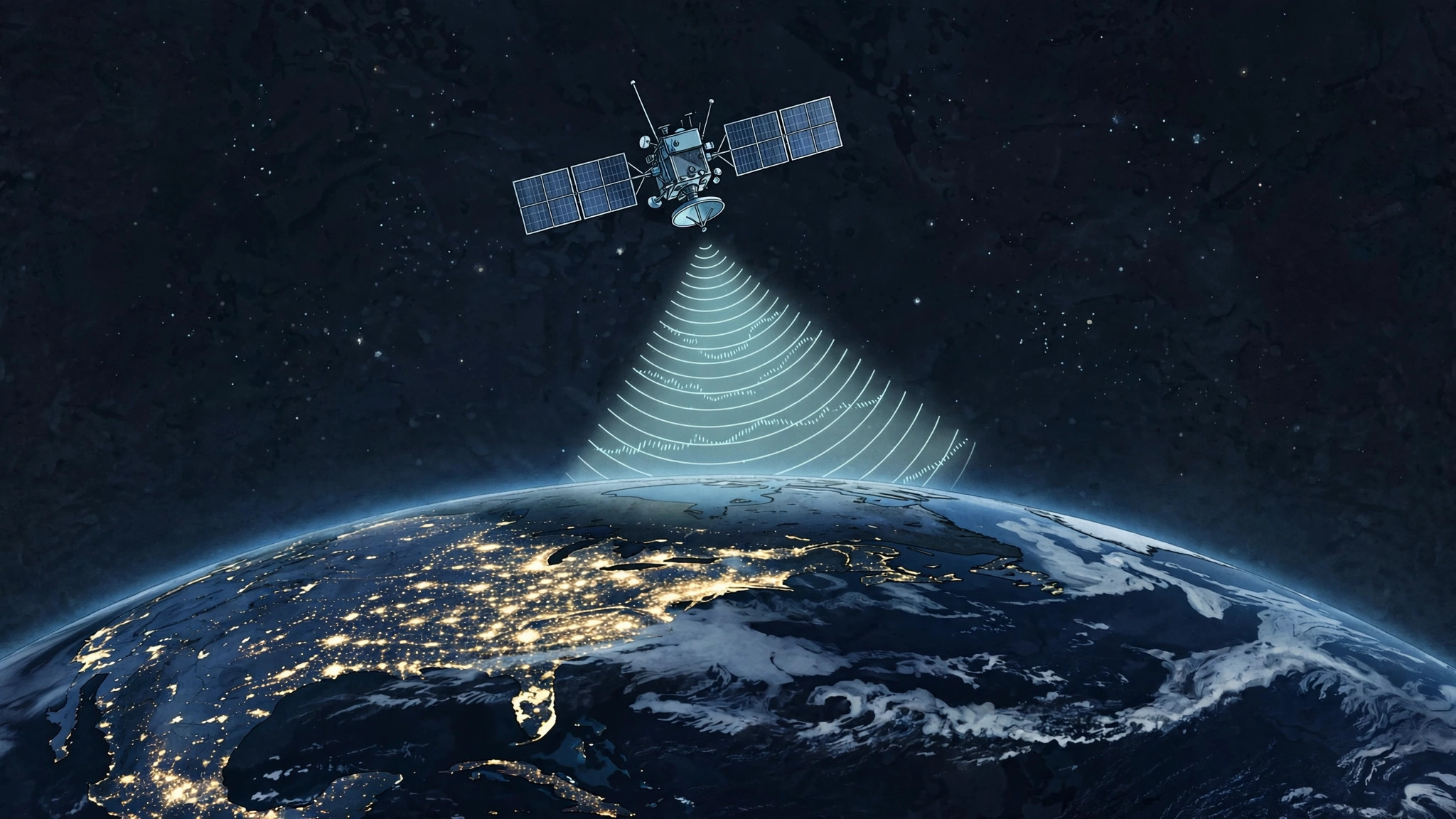
Compare this to the other frontier of this week's funding news. While AI labs like Manus are raising on momentum, ICON is raising on deployed hardware with a price list. While space-adjacent startups like Kapta's radar satellites chase defense contracts, ICON is selling to homebuilders. Different bets, same theme: 2026's money is flowing to companies that make atoms behave, not just tokens.
The honest caveats
Two hundred million dollars is a lot of money, and construction is a brutal industry. Labor markets, permitting, insurance, local codes — robots don't make any of that disappear. The housing crisis is also not primarily a construction-speed problem in most markets; it's a land, zoning, and financing problem. A faster printer doesn't fix a zoning board.
But here's what the raise does prove: the investors who are most allergic to vibes — BlackRock, Baillie Gifford — just put $200M on a company whose machines print houses. That's not a vibe. That's a bet that the physical economy is finally ready for the automation conversation the software economy had a decade ago.