Cisco Email Gateway Zero-Day (CVE-2026-76519) Is Under Active Attack: Patch It Now
Cisco disclosed an actively exploited 9.8-rated zero-day in Secure Email Gateway that hands unauthenticated attackers root access with a single crafted email attachment. Here's how to check your gateway and what to patch first.
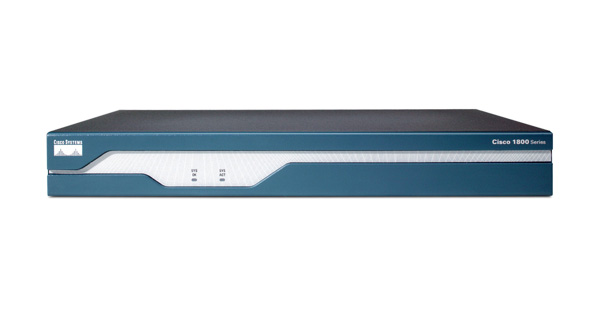
Cisco just confirmed the nightmare scenario for anyone running its email security hardware: a 9.8-rated zero-day in the Cisco email gateway that is already being exploited in the wild. An attacker doesn't need credentials, a phishing click, or even a foothold on your network. They just need to send your gateway one crafted email attachment.
The flaw, tracked as CVE-2026-76519, turns the appliance that's supposed to keep malicious email out into a remote-controlled machine running attacker commands as root. Cisco found it through its own internal security scanning, and there are no workarounds. If your mail flows through a vulnerable box, this is an emergency patch, not a scheduled maintenance window.
What the Cisco email gateway flaw actually does
CVE-2026-76519 is a relative path traversal bug (CWE-23) in the Content Scanner Tools component that powers the gateway's Advanced Malware Protection. When File Reputation is enabled and assigned to a mail policy, and the component is older than version 25.3.0.5525, a single email with a crafted attachment is enough. The scanner mishandles the attachment, and the attacker gets arbitrary file writes on the underlying OS — then command execution as root.
That last detail is what earns the 9.8 CVSS score. Network-accessible, low attack complexity, no privileges, no user interaction. Nobody has to click anything. The victim doesn't even have to open the email — the gateway processes it on the way in, and that is the whole exploit.
Both physical and virtual Secure Email Gateway appliances are exposed if they run vulnerable AsyncOS software. Cisco's fixed releases are AsyncOS 15.5.5-014 and 16.5.0-780; if you are on AsyncOS 16.0, you need to migrate to a fixed release, and Cisco strongly recommends anyone below 16.5 move up to 16.5.0-780. The one piece of good news: you don't necessarily need a full software upgrade. Updating Content Scanner Tools to 25.3.0.5525 or later fixes it with no restart — and if your box has automatic component updates switched on, you may already be covered.
Why the third zero-day in a year should worry you
This is the third actively exploited Cisco Secure Email Gateway zero-day in under twelve months. One zero-day is an incident. Three in a year is a campaign.
Email gateways are an ideal target, and attackers clearly know it. Every message your company sends and receives passes through that appliance. Own it, and you can read mail, alter it, steal credentials from it, or pivot deeper into the network — all from infrastructure that most organizations treat as set-and-forget.
The pattern isn't unique to Cisco, either. Ivanti's Connect Secure zero-day was the third year running that attackers hit that product line. Edge security appliances — VPNs, firewalls, email gateways — are the most contested hardware on the internet right now, and they need to be patched on emergency timelines, not quarterly cycles.
How to check if you're exposed
Do this today, not next week:
- Check the component version. SSH into the appliance and run
contentscannerstatus. If Content Scanner Tools is older than 25.3.0.5525, you are vulnerable. - Check whether File Reputation is even on. In the management interface, look under your incoming and outgoing mail policies' Advanced Malware Protection settings. The flaw only bites when File Reputation is enabled and assigned to a policy — but don't try to dodge it by toggling settings; patch instead.
- Update the component. If automatic updates were disabled, run
contentscannerupdatemanually and verify the new version. No upgrade, no restart required. - Look for evidence of compromise. Run
grep "System Security" system_logson every cluster member. Root access lets an attacker tamper with or delete appliance logs, so cross-check your firewall and network logs for suspicious traffic involving the gateway. If it is a virtual appliance, preserve forensic evidence before you upgrade — the upgrade wipes the data you would investigate. - If compromised, rebuild — don't patch in place. Cisco's recovery guidance is blunt: deploy a fresh VM, rebuild the configuration without importing the old one, rotate credentials and cryptographic material, and restore every member of an affected cluster. For physical appliances, call Cisco TAC.
Patch first, investigate second
Two things make this patch unusually easy to justify: the Content Scanner Tools update needs no downtime, and Cisco's own cloud gateway infrastructure is already fixed — so there is no waiting on anyone else.
The harder question is the one nobody wants to ask: if your mail gateway had been silently owned at root level last week, how long would it have taken you to notice? Most organizations couldn't answer that, which is exactly why CISA puts actively exploited flaws like this in its Known Exploited Vulnerabilities catalog — the fix-this-now-or-else list that federal agencies are legally required to honor.
Cisco found this one through its own internal security scanning. Judging by the last twelve months, the next one probably won't be found first by the vendor either. Get the emergency-change process written for your email infrastructure now — before October's breach wave becomes the season's routine.