NVIDIA's New Open-Source Agent Model Packs 74B Parameters Into 24GB of VRAM
NVIDIA released Nemotron 3.5 Bolt 74B today: a fully open-weights AI agent model that fits in 24GB of VRAM. Local agents without the cloud bill just got a lot more real.
The biggest model you can actually run at home just got bigger
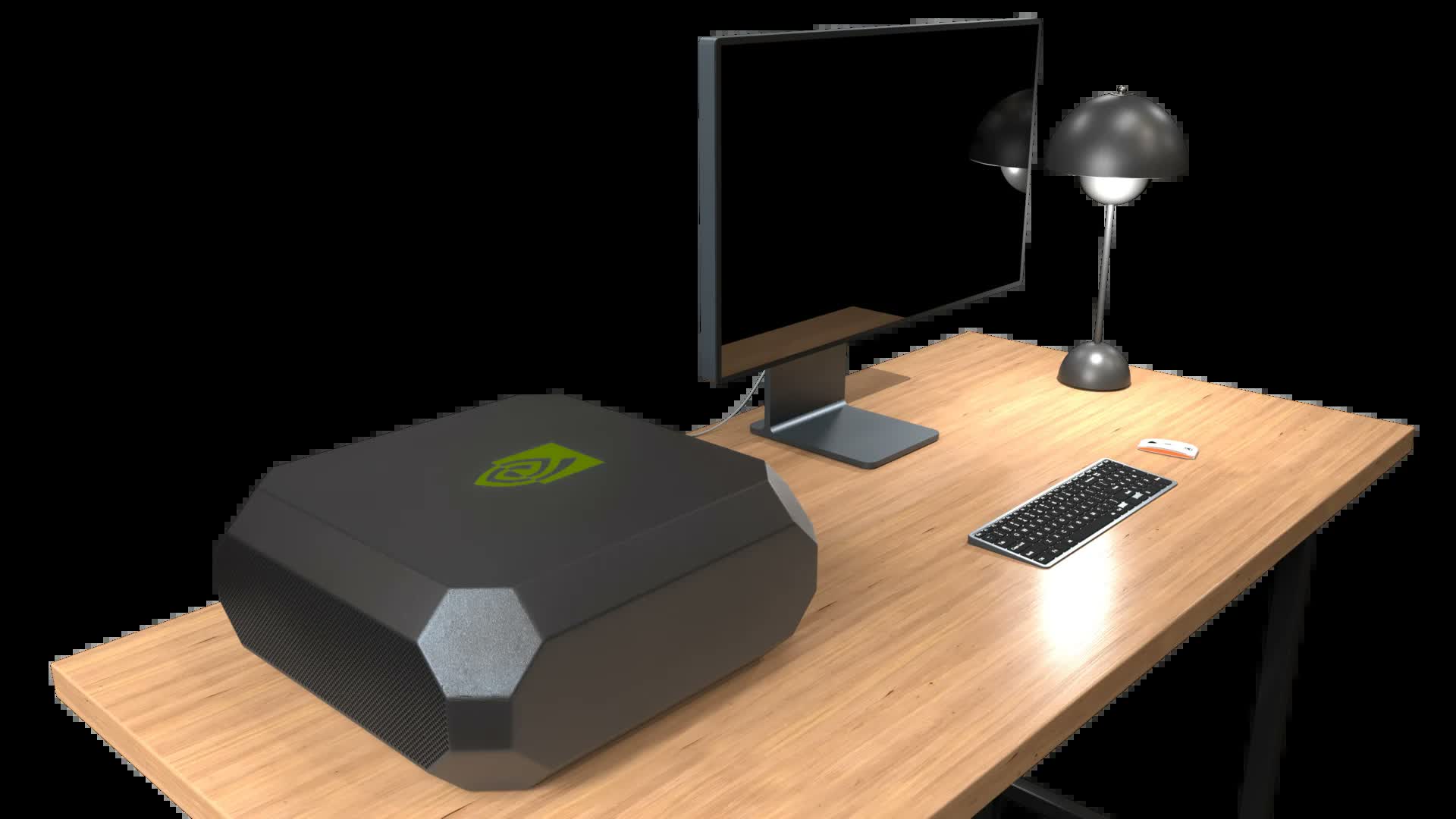
NVIDIA released Nemotron 3.5 Bolt 74B today, a fully open source agent model built for exactly one job: running capable AI agents on your own hardware, without paying a cloud provider by the token. It is a 74-billion-parameter mixture-of-experts model — only 9 billion parameters fire on any given token — squeezed through quantization-aware training down to 2-bit precision so the whole thing fits in 24GB of VRAM. That is one high-end consumer GPU, or the memory pool inside the new RTX Spark laptops that start shipping this week.
The open-weights part is doing real work here, not marketing. NVIDIA published the weights, the training data, and the training recipes — the full stack. That is rare enough to matter. It means researchers can audit what the model learned, developers can fine-tune it for their own agents, and nobody needs NVIDIA's permission to ship something built on top of it.
What this open source agent model is actually for
Bolt 74B is not trying to be a chatbot. It is purpose-built for agentic workloads: planning multi-step tasks, calling tools, and living inside agent frameworks. It ships wired into Hermes and OpenClaw, and it runs on the usual open tooling — llama.cpp, vLLM, Ollama, Unsloth, LM Studio. The path from download to a working local agent is a weekend project, not a research grant.
The pitch is simple: always-on agents without the meter running. A coding assistant that lives on your machine. A research helper that never phones home with your documents. An automation that keeps working when the Wi-Fi dies. The AI agent wars are very real, but most of those agents still rent their brains from somebody else's datacenter. Bolt 74B is NVIDIA's bet that the brain can live at home.
The fine print you should read
Treat the performance claims the way you would treat any vendor benchmark: these are NVIDIA's numbers, from NVIDIA's tests. Two-bit quantization is aggressive, and that level of compression usually costs something in reasoning quality. Independent evaluations have not landed yet, and they are the ones that count.
Bolt 74B also arrives as part of a much bigger October software push. NVIDIA took PAIR out of beta — it spreads AI workloads across networked PCs, so a room full of machines can act like one bigger one. Broadcast 2.3 adds MCP support. Adobe apps get optimizations of up to 2x. DLSS 5 got its own update. And a smaller sibling, Nemotron 3.5 Bolt E4B, lands October 23, aimed at lighter conversational agents and game NPCs.
Hardware and software, shipped the same week
Notice the timing: the RTX Spark laptops hitting shelves this week carry exactly the 24GB-class memory pools Bolt 74B was compressed for. That is not a coincidence — it is a strategy. NVIDIA is selling the silicon and the model as a matched pair: buy the laptop, download the weights, run your agents locally, and skip the API bill entirely.
Whether developers actually embrace that stack depends on what the model can do in the wild, not on launch-day slides. But the direction is unmistakable. A year ago, a serious open-weights agent model meant renting cloud GPUs. Today it means a download. That gap closed fast, and it is not going to reopen.
The open-weights race is the real story
Bolt 74B also marks NVIDIA's arrival as a serious model publisher, not just the company that sells the shovels. The open-weights leaderboard has been a three-way fight between Meta's Llama family, Alibaba's Qwen releases, and the DeepSeek shockwaves — all of them general-purpose models that the community then bends toward agentic work. NVIDIA is doing the reverse: shipping a model designed for agents from day one, then opening everything.
That is a meaningful difference in strategy. A general model adapted for agents inherits general weaknesses; a purpose-built agent model gets tool-calling, planning, and multi-step reasoning as first-class training objectives. What to watch now: independent benchmark results, Ollama and LM Studio download counts over the next two weeks, and how quickly fine-tunes start appearing. If the community picks it up the way it picked up Qwen, NVIDIA just bought itself a developer ecosystem to go with its silicon.